
Book of Dead Slot Overview
Book of Dead is one of the most recognisable video slots developed by Play’n GO and distributed widely across regulated online casino platforms, including UK-facing environments. The game belongs to a category of reel slots built around a small number of clearly defined mechanics rather than layered bonus systems. While many modern titles attempt to introduce multiple simultaneous features, Book of Dead concentrates most of its session behaviour around a single central structure: the Book symbol and the free spin round with expanding symbols.
The slot follows a traditional five-reel layout with ten fixed paylines. Combinations are evaluated from left to right across these lines, and each spin represents a fully independent outcome produced by the game’s Random Number Generator. The layout itself remains constant throughout both base gameplay and feature rounds. This means the visual environment of the reels does not change when the free spin feature begins. Instead, the internal rule set of symbol behaviour becomes temporarily modified through the expanding symbol mechanic.
Understanding this distinction is important when describing the slot from an operator perspective. Book of Dead does not switch into a separate bonus game with different reels or a secondary prize wheel. Instead, the base reel structure remains the same, and the feature simply introduces an additional rule layer affecting symbol expansion and line completion. That continuity keeps the game easy to follow while still allowing the free spin feature to concentrate most of the session’s volatility into a relatively small number of rounds.
Reel Structure and Payline System
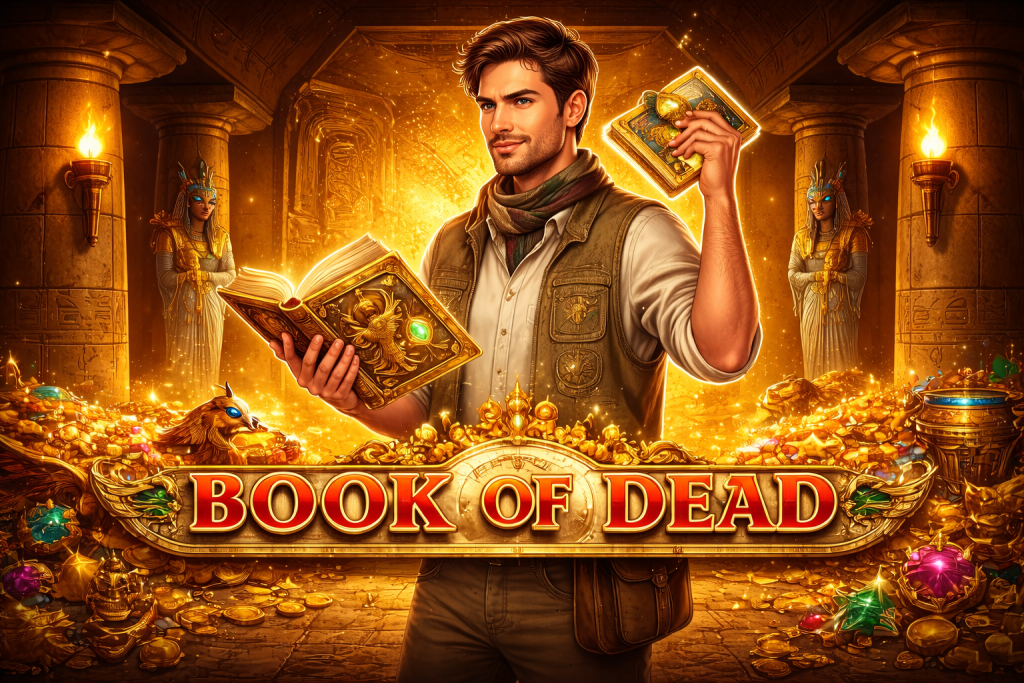
The five-reel, ten-payline model used in Book of Dead is designed to maintain visual clarity and predictable combination logic. Each reel contains a mixture of lower-tier symbols and premium character symbols inspired by an adventure-themed setting. Winning combinations occur when matching symbols appear across adjacent reels starting from the leftmost reel. Because the paylines remain fixed, players do not need to adjust line selection during play, and the evaluation rules stay consistent across every spin.
This consistency contributes to the game’s overall rhythm. Since the reel layout does not change between base spins and feature spins, the transition into a bonus round does not interrupt the visual flow of the game. Instead, the change occurs through symbol behaviour. The reels continue spinning normally, but the selected symbol inside the free spin feature may expand to cover entire reels when it appears. This approach allows the slot to maintain a stable interface while introducing moments of concentrated intensity.
The Book Symbol and Feature Trigger
The Book symbol serves multiple roles inside the slot. During base gameplay it acts as both the highest-value regular symbol and the scatter symbol that triggers the free spin feature. When three or more Book symbols appear anywhere on the reels, the free spin round begins. Because the symbol performs both functions, it becomes a central visual marker within the session. Players tend to associate the appearance of multiple Book symbols with the possibility of entering the main feature state.
Once the feature activates, one regular symbol is randomly selected to become the expanding symbol for the entire free spin sequence. Whenever this chosen symbol appears on the reels, it expands vertically to cover the full height of the reel, increasing the likelihood of forming multiple paylines simultaneously. This mechanic is responsible for the majority of the slot’s larger visible outcomes. However, it does not alter the fundamental RNG logic that determines symbol placement on each spin.
RTP and Long-Term Outcome Distribution
Book of Dead operates using a theoretical Return to Player (RTP) model similar to other regulated slot games. RTP represents the statistical distribution of stakes returned to players across an extremely large number of spins. The figure is calculated mathematically and is not designed to predict short session results. In practice, this means individual sessions may sit above or below the theoretical value without indicating anything unusual about the game’s behaviour.
The concept of RTP is closely tied to the scale of observation. A handful of spins or even a single play session is too small a sample to reflect the long-term distribution built into the game. This is particularly relevant in a slot like Book of Dead because the volatility structure
Volatility Model in Book of Dead
Book of Dead is commonly described as a high volatility slot, and this classification relates directly to how outcomes are distributed across gameplay. In a high volatility structure, the majority of spins may produce small or neutral outcomes while a larger share of the game’s value is concentrated inside specific feature events. In the case of Book of Dead, that concentration occurs primarily within the free spin round with expanding symbols. The base game itself tends to deliver relatively modest line combinations compared with the feature stage.
This distribution pattern does not imply that the feature will appear frequently or that it will necessarily produce large outcomes each time it triggers. Instead, it means that the mathematical model allows a larger portion of the slot’s value to occur during those feature windows when compared with the base reel state. This structure is typical for adventure-themed slots built around a free spin mechanic. The base game maintains the pacing of the session, while the feature round creates the moments where larger combinations become possible due to expanded reel coverage.
Understanding volatility in this context is important because it explains why the slot can sometimes produce long periods of ordinary base spins followed by short intervals of higher activity. Those intervals are part of the distribution model rather than a change in the game’s rules. The slot does not shift into a different probability system when the feature activates. The same RNG process continues to determine symbol placement on every spin, both inside and outside the free spin sequence.
RNG Behaviour and Independent Spins
Every spin in Book of Dead is generated through a Random Number Generator (RNG) that operates independently of previous outcomes. The generator continuously produces numerical values that correspond to positions on the reel strips. When the player initiates a spin, the current values determine which symbols appear. Because this system is memoryless, the slot does not track earlier spins and does not adjust probabilities in response to previous results.
This independence applies equally to base spins and free spin rounds. Even when the feature is active, each spin remains a new random event inside the feature’s rule set. The expanding symbol mechanic may change how symbols behave when they appear, but it does not change the underlying random process that decides whether they appear at all. As a result, the slot does not create streaks intentionally and does not correct previous outcomes.
From an operator standpoint, this independence is essential for maintaining regulatory compliance and predictable statistical behaviour. It ensures that the slot cannot adapt its results dynamically to player behaviour, which would violate the principles of fair gaming design. Each spin remains a separate outcome within the mathematical model that defines the game.
Feature Concentration and Session Rhythm
The volatility structure of Book of Dead produces a session rhythm that differs from many low-volatility slots. Because most of the feature potential is contained within the free spin round, the base game may feel relatively quiet by comparison. This does not mean the base game is inactive; it simply means that its role in the design is to maintain pacing while the feature provides the moments of concentrated value distribution.
When the free spin feature activates, the gameplay experience changes noticeably because the expanding symbol mechanic can fill entire reels when the chosen symbol appears. This increases the likelihood of completing several paylines simultaneously. The visual impact of the expanding symbol is part of the slot’s design identity. It creates moments where the reels appear to transform suddenly, even though the fundamental rules remain the same.
These moments contribute strongly to the perception of volatility. A session may progress quietly for some time and then briefly become highly active during the feature round. That contrast is typical of high-volatility slots and is one of the reasons Book of Dead remains widely recognised across casino catalogues.
Book of Dead Variance & Session Model
Book of Dead Variance & Session Pace Model
This visual model compares the main gameplay stages in Book of Dead. It focuses on volatility distribution and session pacing rather than financial outcomes. The graph is designed to illustrate how base spins, feature triggers, and free spin sequences shape the rhythm of a typical session.
Operator note: the model above is qualitative and intended to illustrate how volatility concentration occurs during free spin sequences.
Book of Dead Feature Mechanics
Although Book of Dead appears visually simple, the internal structure of the slot is organised around several interacting mechanics. These mechanics define how the game transitions between base gameplay and the feature round. The most important element is the Book symbol, which performs two functions at the same time. During ordinary spins it behaves as the highest-value regular symbol, while it also acts as the scatter that triggers the free spin feature when three or more appear anywhere on the reels.
Once the feature activates, the slot selects one regular symbol randomly. That symbol becomes the expanding symbol for the entire free spin sequence. Whenever it appears during the feature round, it expands vertically to fill the entire reel. This behaviour increases the probability of completing paylines across multiple reel positions at once. The mechanic does not alter the probability of the symbol appearing; it only changes how the symbol behaves when it lands.
The expanding symbol mechanic is responsible for the most visually intense moments within Book of Dead. Because the symbol can fill a full reel height, it becomes possible for multiple paylines to complete simultaneously when the same symbol appears across adjacent reels. This is why many of the slot’s larger outcomes occur during the free spin round rather than in the base game. However, it is important to note that the feature does not change the underlying RNG process that determines symbol placement.
Another important part of the feature structure is the scatter trigger logic. The Book symbol does not need to appear on a specific payline to activate the free spins. It only needs to appear anywhere on the reels. This makes the feature visually easy to recognise. When three or more Book symbols land in the same spin, the game transitions directly into the free spin round. During this round the reel layout remains the same, but the expanding symbol rule becomes active.
The feature system also affects how volatility is perceived during gameplay. Because the base game typically produces smaller line combinations, the free spin round becomes the moment where the slot concentrates a larger portion of its variance. This distribution pattern explains why Book of Dead is often described as a high-volatility slot. The slot is designed so that the most significant combinations occur when the expanding symbol mechanic aligns across multiple reels during the feature.
Understanding the mechanics behind the feature round makes the slot easier to interpret. The game does not include cascading reels, multipliers that grow indefinitely, or progressive prize systems. Instead, the entire feature identity of the slot is built around symbol expansion within a fixed reel structure. This approach keeps the game rules relatively transparent while still allowing moments of strong visual impact during the free spin round.
Book of Dead Feature Mechanics Table
Book of Dead Feature Mechanics
Book of Dead Session Behaviour
Book of Dead is a good example of how a slot can remain mechanically simple while still producing a very uneven session rhythm. The game does not rely on many parallel systems. Instead, it concentrates most of its intensity into one clear feature layer: the free spin round with an expanding symbol. Because of that structure, the base game and the feature game feel very different in practical play, even though they are part of the same slot model. The player spends much of the session in standard reel behaviour, then occasionally enters a more compressed phase where symbol expansion can create a much stronger line-building effect.
This uneven rhythm is one of the defining characteristics of high-volatility slots. In Book of Dead, the base game often acts as the spacing layer between feature opportunities. It keeps the session moving, but it does not usually carry the same concentration of value as the free spin round. That design can create long quieter stretches where the slot appears relatively calm, followed by short periods where the visual and structural intensity rises quickly. From a product perspective, this does not mean the game is changing its logic. It means the slot is distributing more of its impact through feature concentration rather than through steady base-game flow.
Why Quiet Periods Matter
Quiet periods are not a flaw in the structure of Book of Dead. They are part of how the volatility model is expressed. A high-volatility slot does not need to produce constant visible momentum in order to function as designed. In fact, the contrast between ordinary base spins and occasional feature rounds is part of what defines the identity of the game. The base game provides continuity, while the feature provides the moments where expanded symbols can create broader payline coverage and more significant visible outcomes.
This is also why short sessions can feel very different from one another. One session may include a feature round relatively early, while another may spend longer in the base state. Neither outcome means the slot is behaving unusually. Because the RNG remains independent on every spin, the spacing between feature triggers is still governed by randomness rather than by progression. The game does not build toward a feature in a predictable way, and it does not “owe” one after a sequence of ordinary spins.
Demo Mode and Slot Exploration
Demo mode is particularly useful for a game like Book of Dead because the slot has a very clear mechanical split between ordinary play and feature concentration. In demo mode, players can observe how the reel layout works, how the Book symbol behaves as a trigger, and how the expanding symbol changes line completion during free spins. This makes the game easier to understand without involving real balance movement. From an operator perspective, demo mode helps reduce confusion around feature logic and volatility expectations.
It is important to frame demo play correctly. Demo mode is not a predictive tool, and it does not reveal future live-session behaviour. The purpose of demo play is to explore mechanics, pacing, and interface logic. In Book of Dead, that is especially useful because many players first encounter the slot through its reputation for volatility rather than through an understanding of how the feature actually works. A short demo session can clarify that the feature is structurally simple even if the value distribution around it is less even than in lower-volatility titles.
Wagering and Bonus Interaction
Book of Dead may also be played while an account is inside a promotional or bonus state, but that does not change how the slot itself generates results. The game still runs on the same RNG logic, the same reel structure, and the same expanding symbol feature. What changes is the account layer around the slot. If wagering rules are active, they determine how eligible staking volume is counted against bonus release conditions. They do not change RTP, and they do not influence the likelihood of a Book trigger or a feature round.
That distinction matters because bonus terms are often misunderstood as part of game performance. In reality, wagering is a wallet rule and release condition, not a gameplay enhancer. It does not improve symbol behaviour, does not create better feature frequency, and does not alter volatility. Book of Dead remains the same slot whether it is played in demo mode, with cash balance, or during a bonus-related account state. The surrounding terms can affect fund availability and withdrawal conditions, but the slot’s internal model stays unchanged.
How Book of Dead Fits in a UK Slot Catalogue
Within a UK-facing casino library, Book of Dead typically sits in the category of high-recognition, feature-led slots. It is not built to demonstrate smooth pacing or constant event frequency. Instead, it represents a more concentrated model where the game’s most memorable moments come from a single well-defined mechanic. That makes it useful as a contrast point against lower-volatility titles. Players who understand Book of Dead usually understand a broader category of slots where the session experience depends more heavily on feature rounds than on regular base-game continuity.