

Games Environment at Admiral Casinos
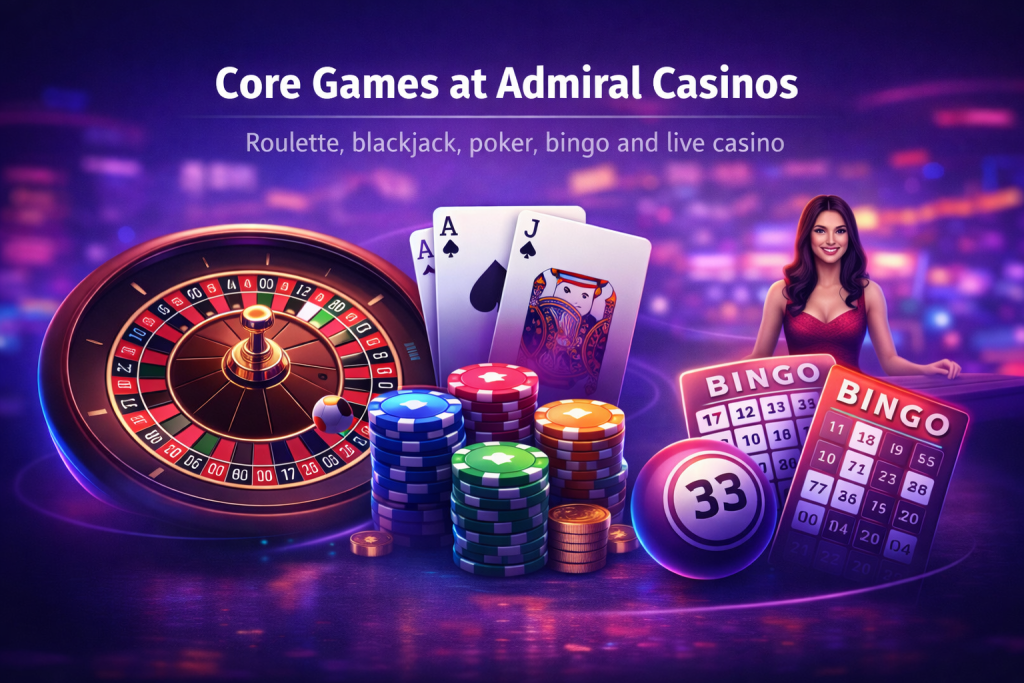
Admiral Casinos organises its games catalogue around several core categories that represent the traditional structure of an online casino platform. Rather than presenting games as isolated titles, the platform groups them by mechanics, session rhythm, and gameplay format. This structure helps players understand how different games behave before choosing where to play. The main categories available include roulette, blackjack, poker variants, bingo, and live casino experiences. Each category represents a different type of interaction between player decisions, randomness, and session pacing.
Online casino games operate using certified random number generation systems where applicable. In RNG-based games such as roulette, blackjack variations, and many poker implementations, outcomes are generated by independent algorithms that produce statistically random results. These systems do not track previous rounds and do not compensate for prior outcomes. Each spin, hand, or round exists as a separate event. Because of this independence, short-term sessions can vary significantly from the theoretical long-term distribution that a game is mathematically designed to follow.
Return to Player (RTP) values describe the theoretical percentage of stakes that a game returns to players over a very large number of rounds. It is important to understand that RTP is not designed to predict results during a short session. A small number of rounds may produce outcomes above or below the theoretical RTP range simply due to normal statistical variance. This behaviour is common across all regulated casino games and should not be interpreted as an indicator of future results or patterns.
Volatility is another concept that influences how games feel during a session. Volatility does not represent profitability but instead describes how outcomes are distributed. Games with lower volatility tend to produce smaller, more frequent results, creating a steadier session rhythm. Higher volatility games distribute outcomes less frequently but with wider variation in value. This difference in distribution affects the pacing of gameplay and the perceived intensity of a session.
Because of these differences, the experience of playing roulette can feel very different from participating in a live dealer blackjack table or a bingo room. Roulette rounds occur quickly and follow a consistent structure, while blackjack introduces player decisions that slightly influence the pace of play. Bingo sessions operate on a communal format where players participate in scheduled rounds rather than continuous spins or hands. Live casino games introduce a real dealer and video stream, which slows the pace compared to automated RNG games but can create a more social atmosphere.
Understanding these structural differences allows players to approach the games catalogue with clearer expectations. Instead of focusing only on individual titles, it can be helpful to consider how each game category behaves over time. The choice between roulette, blackjack, poker, bingo, or live casino often reflects a preference for session tempo, interaction level, and volatility distribution rather than a simple search for outcomes.
Game Categories Overview
Game Categories Overview
A structural overview of the core casino game types available on the platform. These categories differ in volatility distribution, round pacing and interaction level. The table reflects gameplay characteristics rather than outcomes.
| Game | RTP Range | Volatility | Session Pace |
|---|---|---|---|
| Roulette | 94% – 97% | Fast rounds | |
| Blackjack | 96% – 99% | Moderate pace | |
| Poker | 95% – 98% | Variable rhythm | |
| Bingo | Room based | Scheduled rounds | |
| Live Casino | Game dependent | Slower pace |
Operator note: RTP values represent long-term theoretical distribution models. Short sessions may vary significantly due to normal statistical variance.
Core Games Available at Admiral Casinos
The games catalogue at Admiral Casinos focuses on several classic casino formats that have been part of regulated gaming platforms for decades. These include roulette, blackjack, poker variations, bingo, and live casino tables. Each of these games represents a different gameplay structure and session rhythm. Instead of relying on a single game style, the platform allows players to move between faster RNG-driven rounds and slower, more interactive table environments. Understanding how these formats differ can help players choose games that match their preferred pacing and level of interaction during a session.
Roulette
Roulette is one of the most recognisable casino games and operates on a simple but structured system. Players place bets on numbers, colours, or number ranges before a spinning wheel determines the outcome. Online roulette versions typically use certified random number generation to replicate the behaviour of a physical wheel. Each spin is independent, meaning previous results do not influence the next outcome. Because of this independence, patterns observed during short sessions should not be interpreted as predictive signals.
The pace of roulette is generally fast compared to many other casino games. A round usually takes only a short amount of time from bet placement to result. This rapid cycle creates a consistent rhythm where players can participate in many rounds within a relatively short session. The volatility profile of roulette is typically considered moderate because outcomes occur frequently but vary depending on the type of bets placed.
Blackjack
Blackjack differs from roulette in that the player participates in decision-making during each round. While the cards themselves are generated randomly in digital versions, the player can choose actions such as hit, stand, split, or double depending on the game state. These decisions influence the pace of the session and create a slightly more strategic experience compared to purely chance-based games.
Online blackjack tables are usually implemented using RNG technology or through live dealer environments. In RNG versions, the dealing process is simulated digitally but follows the same rules as a physical table. Live blackjack tables involve a real dealer and video stream, allowing players to participate in real-time rounds. Because blackjack introduces player decisions, sessions often progress at a slightly slower pace than roulette, giving players more time to evaluate each hand.
Poker Variants
Poker-style games available in online casinos typically differ from traditional player-versus-player poker rooms. In many casino implementations, poker variants are structured as player-versus-house games where outcomes depend on card combinations rather than direct competition with other players. Examples include variations such as Caribbean Stud Poker or Three Card Poker.
These formats maintain familiar poker mechanics but simplify the gameplay structure. Hands are dealt, combinations are evaluated, and payouts follow predefined tables. Because the house acts as the opposing side, rounds progress quickly and do not require waiting for other players to make decisions. This format creates a balance between decision-based gameplay and steady session pacing.
Bingo
Bingo offers a different experience compared with table games or RNG-based casino formats. Instead of continuous rounds, bingo sessions usually occur in scheduled intervals where multiple players participate in the same game. Numbers are drawn and matched against player cards, with prizes awarded based on specific patterns.
Because bingo is communal rather than individual, the pace of play is slower and more structured. Players often join a room before the game begins and wait for the round to start. This creates a different atmosphere compared to rapid spin-based games such as roulette. The interaction between players and the shared nature of the session are central aspects of the bingo experience.
Live Casino
Live casino games combine traditional casino mechanics with real-time video streaming. Instead of automated RNG outcomes, these games are hosted by professional dealers operating physical tables. Cameras capture the action while players place bets through the online interface.
The pace of live casino games is slower than digital versions because each round follows the physical procedures of a real casino table. Cards must be dealt manually and roulette wheels must spin in real time. However, this slower rhythm can create a more immersive experience for players who prefer a setting that resembles a land-based casino environment.
Live dealer environments often include chat features and visual interaction with the dealer, which can make sessions feel more social compared to standard digital games. While the outcomes are still governed by the rules of the game itself, the presence of a real dealer changes the atmosphere and pacing of gameplay.
Game Structure, Variance and Session Pace
The core game selection at Admiral Casinos covers five familiar formats, but their differences become clearer when they are viewed through session structure rather than theme alone. Roulette, blackjack, poker, bingo and live casino all sit inside the same gaming environment, yet they create very different rhythms once a session begins. Some formats move quickly and repeat outcomes at a high pace, while others slow the experience down and introduce more time between one decision and the next. This matters because the feeling of a casino session is shaped not only by the rules of a game, but also by how often rounds resolve, how much player input is required, and how wide the short-term outcome distribution can appear.
Roulette usually feels direct and cyclical. A player selects bets, the wheel resolves the round, and the next round begins shortly after. This creates a fast loop and makes roulette one of the clearest examples of structured repetition in a casino environment. Blackjack is different because the player has to make decisions during the hand. Even though those decisions do not remove randomness from the dealing process, they change the tempo and make the session feel more deliberate. Poker variants add another layer because round flow depends on hand comparison and table rules, which creates a rhythm that is neither as fast as roulette nor as socially paced as live dealer games.
Bingo stands apart because it is not built around constant individual rounds in the same way. It tends to run through scheduled or room-based cycles, which means the player enters a shared session structure rather than a continuous private loop. The pace is calmer, and the interaction model is lighter. Live casino also slows the environment down, but for a different reason. The rounds are tied to real-time dealing, physical presentation, and dealer-led procedures. That does not make the game more favourable or less random in a commercial sense; it simply changes the tempo and atmosphere of the session.
Variance should also be read carefully across these categories. It is not a statement about which game is “better” and it is not a sign of future performance. It only describes how outcome values tend to be distributed over time. A lower-variance structure usually feels smoother because results appear more evenly spread across many rounds. A higher-variance structure can feel less predictable in the short term because the distribution is wider. This is why two sessions with the same total stake can feel very different even when both games are operating exactly as designed. The chart below is therefore not a performance chart. It is a simple operator-style model that compares session pace and variance behaviour across the main game formats available on the page.
Casino Game Variance & Session Pace Model
Session Rhythm Across Casino Games
Although roulette, blackjack, poker, bingo and live casino belong to the same casino environment, the experience of playing them can feel very different once a session begins. The difference is mostly related to pacing and interaction. Some games repeat quickly and allow players to participate in many rounds during a short period of time. Others introduce pauses between rounds or require more interaction, which changes how a session develops over time.
Roulette is usually one of the fastest formats because each round follows a simple cycle. Players place bets, the wheel spins, and the outcome is resolved. This creates a consistent tempo that repeats quickly. Blackjack slows the process slightly because players make decisions during the hand. Even though the dealing of cards remains random, the presence of decisions changes the flow of each round.
Poker-style casino games introduce a different rhythm again. The pace depends on how hands are compared and resolved. These games are not as repetitive as roulette but still maintain a steady round structure. Bingo stands apart because it is often played in scheduled rounds where multiple players participate in the same session. Instead of continuous rounds, players wait for numbers to be drawn and matched to cards.
Live casino games operate in real time with professional dealers. This introduces a pace closer to land-based casinos. The dealer manages the table, cards or wheels are handled physically, and players interact through a live interface. Because of this real-time process, the rhythm is slower compared with automated RNG games.
Understanding these differences helps players navigate the games page more easily. Instead of focusing only on the name of a game, it can be useful to consider the tempo of play and the level of interaction involved. Some players prefer quick cycles such as roulette rounds, while others prefer the slower and more immersive environment of live casino tables.
Game Rhythm Comparison
| Game | Decision Pace | Variance Tempo | Session Style |
|---|---|---|---|
| Roulette | Fast repeated rounds | ||
| Blackjack | Decision based hands | ||
| Poker | Card comparison rounds | ||
| Bingo | Scheduled room rounds | ||
| Live casino | Real-time dealer tables |