
Gonzo’s Quest Slot Overview
Gonzo’s Quest is a video slot developed by NetEnt and widely recognised across regulated online casino platforms in the United Kingdom. Unlike traditional reel-based slots that rely on spinning symbols across fixed paylines, Gonzo’s Quest introduced a different gameplay model known as the Avalanche mechanic. This system changed how outcomes appear on the grid and how consecutive combinations can occur within a single round. Instead of stopping after a winning combination appears, the game allows symbols to disappear and new ones to fall into place, creating the possibility of chained outcomes.
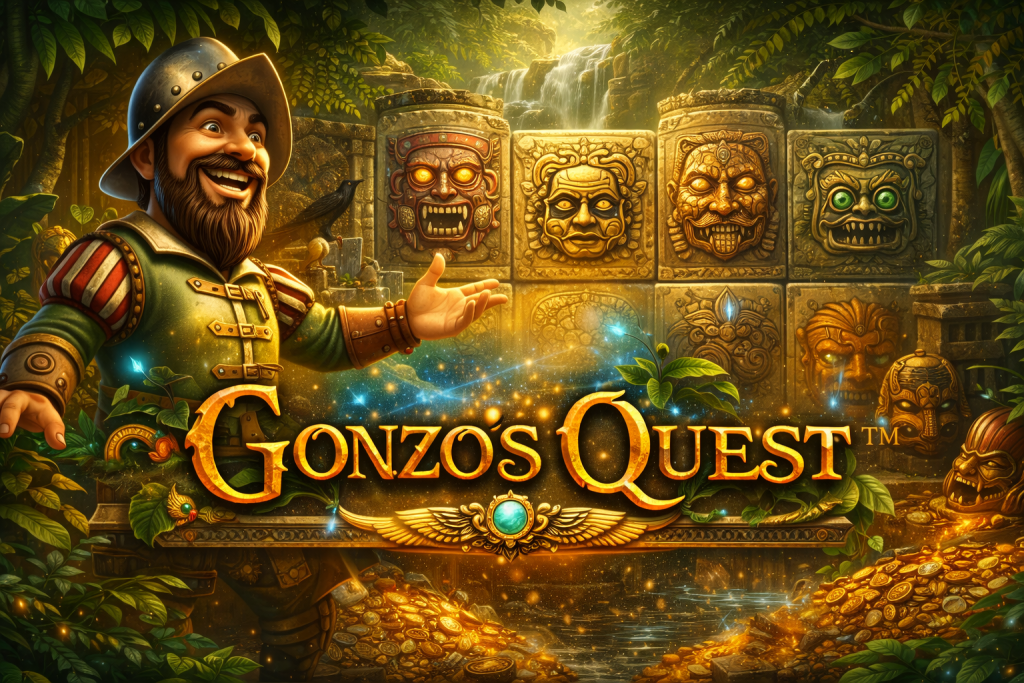
The visual theme of the slot is built around an explorer character named Gonzo searching for hidden cities of gold. However, the defining identity of the game does not come from the theme but from the way the reels behave. Gonzo’s Quest uses a 5×3 grid layout, but it does not function like a standard reel slot once the avalanche mechanic is active. When a winning combination occurs, the symbols involved disappear and new symbols fall from above. This process can repeat several times during the same spin if additional winning combinations appear after the new symbols land.
Avalanche Mechanic and Grid Behaviour
The avalanche mechanic is the central system that drives gameplay in Gonzo’s Quest. In a traditional slot, once a winning line appears the spin ends and the next round begins. In Gonzo’s Quest, the round continues if the avalanche creates another winning combination. This means a single spin can contain multiple outcome stages. Each new symbol drop effectively creates a continuation of the original round rather than a separate spin.
This structure changes how the session rhythm feels. Because the avalanche mechanic allows outcomes to chain together, the player can experience several connected events in a short period of time. The slot therefore feels more dynamic than many traditional reel slots even though the base grid remains relatively simple. The cascading behaviour creates a sense of motion across the grid as symbols repeatedly fall into new positions.
Multiplier Ladder System
Another important part of the avalanche model is the multiplier ladder that increases during consecutive avalanches. When a winning combination triggers the first avalanche, the multiplier begins at its base level. If another winning combination appears during the same chain, the multiplier increases. Each subsequent avalanche within the same spin raises the multiplier further until the chain ends.
The multiplier ladder does not persist between spins. It resets when the avalanche sequence ends and a new spin begins. This design keeps the multiplier connected directly to the chain of events produced by the avalanche mechanic rather than turning it into a permanent progression system. The multiplier therefore acts as a short-lived amplifier of consecutive outcomes rather than as a persistent reward layer.
RTP and Long-Term Outcome Model
Like other regulated slot games, Gonzo’s Quest operates using a theoretical Return to Player (RTP) model. RTP represents the mathematical distribution of stakes returned across a very large number of spins. It is calculated over extremely large sample sizes and should not be interpreted as a prediction of short-session results. In practical play, individual sessions can vary widely above or below the theoretical return simply due to randomness.
Because the avalanche mechanic allows multiple outcomes within a single spin, players may sometimes perceive that the slot behaves differently from traditional reel slots. However, the underlying statistical model remains the same. Each spin begins with an independent RNG calculation that determines the initial symbol layout. Any avalanches that occur afterward are simply the result of symbol removal and replacement within that original outcome chain.
RNG Independence in Gonzo’s Quest
The game uses an independent Random Number Generator to determine the symbols that appear on the grid. Each spin is generated without reference to the previous spin, meaning the system has no memory of past results. The avalanche mechanic does not alter the independence of the RNG process. It only changes how symbol positions are evaluated after a winning combination appears.
This independence ensures that the slot does not create predictable streaks or compensating outcomes. Even if several avalanches occur during one spin, the next spin is generated independently with no influence from the previous chain. From a regulatory perspective, this independence is essential for maintaining fairness and consistency across the game’s statistical behaviour.
Gonzo’s Quest Gameplay Model
Gonzo’s Quest Gameplay Model
RTP Context and Avalanche Volatility
Gonzo’s Quest is often discussed in relation to its Avalanche system, but understanding the slot properly requires separating two different ideas: the theoretical return model and the visual behaviour created by cascading symbols. Like other regulated slots, the game operates under a Return to Player (RTP) framework that represents long-term statistical distribution rather than short-session expectations. RTP describes how the game behaves across a very large number of spins. It does not describe how a short session or a single feature sequence will behave in practice.
Because Gonzo’s Quest can produce multiple cascades inside a single spin, players sometimes perceive that the slot produces more activity than traditional reel slots. In reality, the avalanche mechanic simply compresses several potential outcomes into a continuous chain. The underlying probability model remains unchanged. Each spin still begins with an independent random number generation that determines the initial symbol layout. The cascades that follow are simply the result of symbol removal and replacement after a winning combination appears.
Avalanche Chains and Multiplier Growth
The distinctive rhythm of Gonzo’s Quest comes from the way avalanche chains interact with the multiplier ladder. When a winning combination appears, the symbols disappear and the next avalanche occurs. During this sequence the multiplier increases step by step. The longer the chain continues, the higher the multiplier climbs. However, this ladder resets once the cascade sequence ends and the next spin begins.
This structure produces a very specific form of volatility perception. A single spin may appear relatively calm if it produces no avalanche sequence. In contrast, another spin may contain several cascades and a rising multiplier. Because these events happen inside one continuous round, the session can shift rapidly between quiet and active states. That contrast is not unusual in cascade-based slots and is one reason the game is often described as having medium-to-high volatility characteristics.
Distribution of Value Across Cascades
Another important element in Gonzo’s Quest is how value distribution interacts with cascading mechanics. In traditional reel slots, each spin produces a single outcome before the next spin begins. In a cascade system, several outcomes may occur sequentially inside the same spin. From a structural standpoint, this means that part of the slot’s variance is concentrated within avalanche sequences rather than being distributed evenly across spins.
This distribution can create moments where the session appears particularly dynamic. A single avalanche chain may contain multiple combinations as symbols continue falling into new positions. However, the cascading process does not create additional randomness beyond the original symbol generation. The RNG determines the starting state, and the cascades simply resolve the combinations that follow from that arrangement.
RNG Independence and Session Behaviour
Even though the avalanche mechanic visually connects several outcomes together, the RNG independence principle still applies to every spin. The slot does not track previous cascades or adjust probabilities after a chain occurs. Each new spin begins from a fresh random state generated by the game’s internal number generator. This independence ensures that the slot remains compliant with regulated gaming standards and maintains predictable statistical behaviour over time.
Because of this independence, avalanche chains should not be interpreted as signals about future outcomes. A long cascade sequence does not make another cascade more or less likely in the next spin. Similarly, a quiet sequence of spins does not increase the probability of a large cascade chain appearing next. The slot continues to generate outcomes through the same random process regardless of previous activity.
Gonzo’s Quest Avalanche Variance Model
Gonzo’s Quest Avalanche Variance Model
This qualitative model illustrates how cascading mechanics influence the perceived intensity of a session. It does not represent financial outcomes or predictive behaviour. The graph focuses on how avalanche chains and multiplier growth affect the rhythm of gameplay.
Operator note: the model above illustrates how cascading sequences can increase perceived activity within a spin while the overall statistical model of the slot remains unchanged.
Gonzo’s Quest Feature Mechanics
Gonzo’s Quest uses a relatively compact ruleset, but the interaction between its mechanics is what gives the slot its distinctive identity. The most important system is the Avalanche mechanic, where winning symbols disappear and new symbols fall into place from above. This creates the possibility of several linked outcomes within a single paid spin. From a product perspective, this matters because the game does not need a large number of separate features to feel active. Instead, it creates continuity by allowing the same round to develop through multiple stages.
That continuity is reinforced by the multiplier ladder. As long as a winning avalanche chain continues, the multiplier increases step by step. This means the visible intensity of the round can rise quickly even though the player has not initiated a new spin. The multiplier is therefore not a permanent progression tool. It is a temporary amplifier tied directly to the current avalanche sequence. Once the chain ends, the multiplier resets and the next paid spin starts again from the base level.
Another important layer is the Free Fall feature, which functions as the slot’s bonus round. In this state, the avalanche logic remains active, but the multiplier ladder becomes stronger than in the base game. This changes the concentration of value inside the feature without replacing the main mechanic. In other words, Gonzo’s Quest does not abandon its core structure when the bonus activates. It keeps the same grid behaviour and simply adds more intensity to the cascade model.
The symbol hierarchy also shapes how the slot feels in session. Lower-value symbols support the majority of ordinary line completions, while premium symbols become more significant when multiple avalanches occur and the multiplier rises. This is one reason the slot can move from a quiet base moment into a more concentrated chain of outcomes within a very short time. The mechanic does not promise consistency, but it does create a recognisable rhythm built around continuation rather than isolated single-spin resolution.
From an operator viewpoint, Gonzo’s Quest is useful because its mechanics are easy to explain in structural terms. The slot is not driven by mystery states or hidden progression. It is driven by visible cause and effect: a win removes symbols, new symbols fall, and the multiplier increases if the chain continues. That transparency makes the game easier to position in a catalogue, especially for players comparing classic reel slots with cascade-based formats.
Gonzo’s Quest Feature Mechanics Table
Gonzo’s Quest Feature Mechanics
This table maps the main mechanics behind Gonzo’s Quest, focusing on how the avalanche model, multiplier ladder, and Free Fall feature shape session behaviour and value concentration.
Gonzo’s Quest Session Behaviour
Gonzo’s Quest is built around motion, but the important point is that this motion comes from continuity inside the same paid round, not from a large number of separate feature systems. The avalanche mechanic changes the rhythm of the session because a spin does not always stop after the first successful combination. When symbols disappear and new ones fall into place, the slot creates an ongoing sequence that can feel more fluid than a traditional reel game. From a product perspective, this makes the session easier to describe as a chain-based experience rather than a one-result-per-spin model.
That distinction matters because the slot often feels more active than its structure first suggests. The player is looking at the same grid, but the round can evolve through several visible stages before fully resetting. This means the session carries more internal pacing variation than a standard fixed-reel slot, even without relying on a very large menu of features. In practical play, Gonzo’s Quest tends to alternate between short quiet moments and short bursts of connected activity. The resulting flow is one of the main reasons the slot remains recognisable across large casino catalogues.
Why Avalanche Chains Change Perception
Avalanche chains affect perception because they compress several developments into a single interaction window. A standard spin might resolve immediately with no continuation, while another spin may progress through multiple winning removals, falling symbols, and multiplier increases. This makes the slot feel more layered without actually becoming structurally complicated. The player does not leave the main game and enter a completely different interface. Instead, the same round deepens through a visible cause-and-effect sequence.
This can sometimes make the slot feel more intense than a classic payline game, especially when several avalanches happen in quick succession. However, that intensity should not be confused with predictability or with a guarantee of stronger results. The avalanche mechanic changes how outcomes are grouped in time, not the regulatory logic of the slot. The game still depends on independent RNG at the start of each new paid spin, and the feeling of momentum created by a good cascade chain does not carry predictive value into the next round.
Multiplier Visibility and Feature Framing
One reason Gonzo’s Quest remains easy to understand is that its main enhancement layer is visible. The multiplier ladder rises in a way that the player can follow directly during the avalanche sequence. This is important from an operator framing perspective because the slot does not hide its most meaningful mechanic behind abstract meters or delayed unlocks. The sequence is readable: a win removes symbols, another drop occurs, the multiplier increases, and the chain continues if another combination forms.
In the Free Fall feature, this same logic remains in place, but the multiplier structure becomes more powerful than in the base game. That can make the feature feel more amplified, but it is still fundamentally the same gameplay language. The slot does not turn into a separate product during bonus play. It remains a cascade-based reel model with temporary multiplier escalation. This continuity keeps the slot coherent. Players can learn the structure in the base game and then see the same logic expressed more strongly in the feature round.
Demo Mode and Mechanical Understanding
Demo mode is useful for Gonzo’s Quest because the slot’s core identity is mechanical rather than narrative. The best way to understand the game is to observe how the avalanche chain behaves, how the multiplier resets, and how the round can continue without requiring a new paid spin. A short demo session often makes these relationships clearer than a short description can. This is especially relevant for players comparing traditional reel slots with cascade-driven formats for the first time.
It is important, however, to frame demo mode correctly. Demo play is a mechanical exploration tool, not a predictive tool. It can show how the grid behaves, how multipliers appear, and how Free Fall changes the ladder, but it cannot forecast live-session outcomes. The role of demo mode is to reduce uncertainty around the rules of the product rather than to create expectations about future balance behaviour. In Gonzo’s Quest, that matters because the slot’s active pacing can easily be mistaken for a pattern-based system when it is really just a transparent continuation mechanic.
Wagering Interaction and Bonus Context
If Gonzo’s Quest is played while an account is under a bonus state or active wagering condition, the slot itself does not change its outcome logic. The RNG remains independent, the avalanche mechanic works the same way, and the multiplier ladder follows the same internal rules. What changes is the account layer surrounding the game. A promotional balance may introduce conditions around eligible staking volume, contribution percentages, or withdrawal release rules, but those conditions do not alter how symbols fall or how cascade chains are generated.
This distinction is important for responsible framing. Wagering should be understood as a release gate tied to eligible stake volume, not as a gameplay enhancement or a path to improved reel behaviour. It does not increase the chance of a chain, does not modify RTP, and does not make the Free Fall feature more likely. Gonzo’s Quest should therefore be interpreted as the same slot across demo play, cash play, and bonus-linked play. The surrounding wallet rules may differ, but the internal game model remains exactly the same.
How Gonzo’s Quest Fits a UK Casino Catalogue
Within a UK-facing slot catalogue, Gonzo’s Quest usually occupies the role of a well-known cascade-based reference title. It sits between classic fixed-outcome reel slots and more modern feature-heavy games, offering a structure that feels dynamic without becoming difficult to read. This makes it useful for players who want something more active than a traditional slot but still prefer a mechanic that can be understood quickly. The slot’s strongest product quality is not complexity. It is clarity of motion. It shows how continuity, visible multipliers, and chained symbol removal can create an engaging session model without relying on excessive rule layering.